
(+351) 213 579 040
(Call to the national landline network)
(+351) 918 884 980
(Call to the national mobile network)

Specialised products and services for seniors and caregivers | Customer Support 213 579040


A Loja do Avô
Couldn't load pickup availability
An articulated ergonomic bed with a viscoelastic mattress is a complete solution for those who need comfort, safety, and daily support. With an adjustable electric frame, it easily adapts to the user's needs, providing correct posture and more peaceful rest in a home environment.
Suitable for bedridden individuals, those with reduced mobility, back pain, or who spend long periods in bed. It is also suitable for users with sensitive skin or a high risk of bedsores, as well as for situations where it is necessary to facilitate the caregiver's work.
The electric articulation allows adjustment of the back, legs, and bed height via a simple remote control, helping to relieve pressure areas and prevent bedsores. The viscoelastic mattress distributes weight evenly, reduces friction and sweating, and includes a bi-elastic, waterproof, and breathable cover. The wooden side rails, wheels with brakes, and robust structure ensure stability and safety in daily use.
A practical, resistant, and comfortable bed, designed to improve the user's well-being and facilitate daily life at home, combining hospital bed functionalities with a neat appearance suitable for home use.


Ergonomic bed –Articulated and adaptable structure that promotes a correct and healthy posture. Suitable for bedridden people or those with back problems.
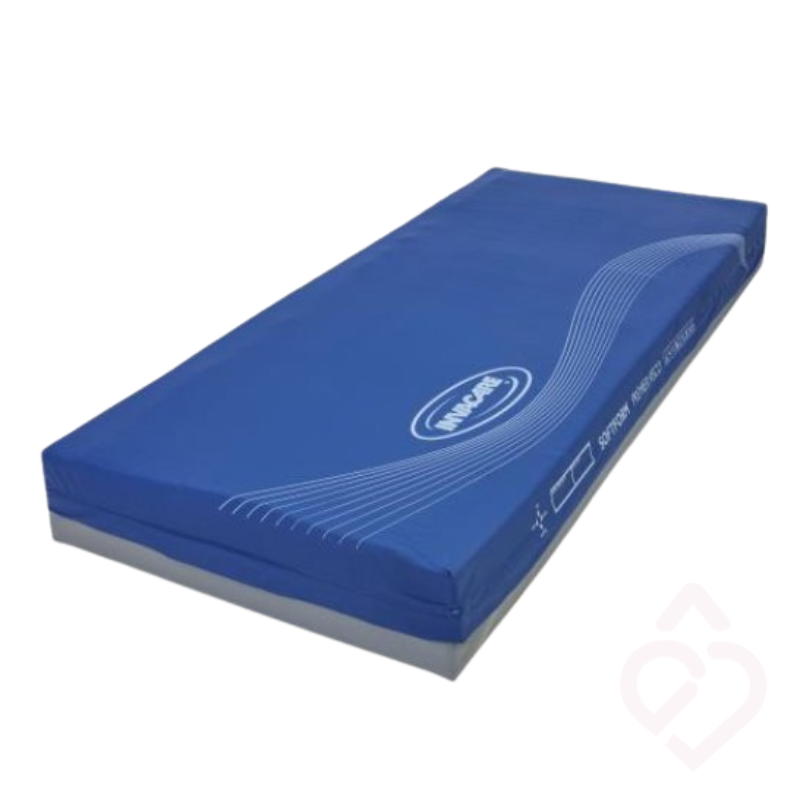
Sleep well –The mattress is comfortable and features a bi-elastic, vapor-permeable cover that helps reduce friction and sweating, contributing to the prevention of pressure ulcers.
Sensitive skin or long periods in bed –The viscoelastic mattress ensures a uniform contact area and significantly reduces pressure zones, adapting quickly to the user's body.
Bed and mattress prevent pressure sores –The electric articulation allows for easy position changes via the remote control, helping to relieve pressure areas. The mattress is indicated for users at high risk of developing pressure sores and is composed of a dense layer of viscoelastic material that adapts to the body.
Mattress with soft, bi-elastic cover –The cover is malleable, resistant, and bi-elastic, helping to reduce the effects of friction.
Reduced risk of liquid infiltration –The zipper seams are welded and the top cover covers the zipper all the way around, reducing the risk of infiltration and helping to save on washing mattress protectors.
Height-adjustable bed –The bed height can be adjusted via the remote control, between 38.5 and 81 cm.
Get in and out of bed safely –The electric adjustable slatted base allows for raising or lowering the bed, facilitating getting in and out with less effort for the user and the caregiver.
Bed remote control –Simple and intuitive remote control that allows you to control:
– Backrest inclination
– Leg rest inclination
– Bed height from the floor
Includes a locking function to prevent unwanted position changes.
Practical bed –Dimensions suitable for any room in the house, combining the comfort of a hospital bed with a pleasant look for home use.
Sleep safely –Includes wooden side rails that help prevent falls during rest.
Wheels –Features wheels with brakes, allowing the bed to be moved safely when necessary.
Assembly –Simple assembly, no tools required. Designed to be assembled by a single person.
Note –This bed is suitable for mattresses with a maximum height of up to 20 cm.
High-quality mattress –Viscoelastic mattress with adequate firmness and a high-resilience foam base. Provides high comfort and optimized positioning, facilitating transfers and lying down. Suitable for articulated beds.
Resistant
– The bed supports a maximum user weight of up to 185 kg
– The mattress supports a maximum weight of up to 247.6 kg
Panels –Beech wood panels on the headboard and footboard, giving the bed a more elegant look.
Promotes autonomy –The user can adjust the position of the bed base independently using the remote control.
Benefits of using an electric articulated bed with mattress
– Allows position adjustment for greater comfort
– Helps prevent the appearance of pressure sores
– Mattress indicated for users at high risk of pressure sores
– Height adjustable to facilitate getting in and out
– Remote control can be used by the user themselves
– Resistant and durable structure
– Includes side rails for greater safety
– Easy assembly and cleaning
Recommendations
– The articulated bed can help with comfort in various daily situations
– The bed base does not accept spring mattresses combined with latex or polyurethane foam mattresses
– Combining the elevation of the backrest and the knee region can help relieve pressure on the lumbar area, provided the user feels comfortable
Delivery and assembly –Delivery and assembly service available.
Features
Electric articulated bed
– Internal width: 90 cm
– Bed length: 200 cm
– Total bed dimensions: 2115 × 1015 mm
– Adjustable height: 38.5 to 81 cm
– Maximum user weight: 185 kg
– Backrest angle: 0° to 70°
– Footrest angle: 0° to 30°
– Casters with brake: 4 × Ø100 mm
– 9V emergency battery
– Includes lifting pole (supports up to 80 kg)
– Includes wooden side rails
Premium viscoelastic anti-pressure sore mattress
– Measurements: 197 × 88 × 15.2 cm
– Polyurethane cover
– Foam density: 38–40 kg/m³
– Viscoelastic foam density: 55 kg/m³
Warranty –In accordance with current legislation
FREQUENTLY ASKED QUESTIONS
Everything you need to know about support equipment, mobility, comfort, home care, and quality of life.
For over two decades, thousands of families, caregivers, healthcare professionals, and institutions have trusted A Loja do Avô to find solutions that promote comfort, autonomy, safety, and quality of life.
Throughout this journey, we have heard thousands of questions.
Some arise every day.
Others appear only at very specific moments in life, such as after surgery, during recovery from an illness, when a family member begins to need support, or when it is necessary to adapt the home.
We have gathered on this page the answers to the questions we are most frequently asked.
Our goal is to help you better understand the different solutions available so that you can make more informed and safe decisions.
If you do not find the answer you are looking for, our team will be happy to help.
SUPPORT EQUIPMENT
1. How to choose the most suitable support equipment?
This is probably the question we have heard most since 2004.
The answer is simple: there is no single ideal equipment for everyone.
Each person has different needs, different physical capabilities, different goals, and lives in a different family reality.
Therefore, before recommending any equipment, we seek to understand several fundamental aspects.
Among them:
• the age and physical condition of the person;
• the degree of autonomy;
• if there is a risk of falling;
• if the limitation is temporary or permanent;
• if there is a caregiver;
• what the home is like;
• what spaces the equipment will be used in;
• what the intended goals are.
For example, two people of the same age may need completely different solutions.
One might only benefit from a cane.
Another might need a rollator.
Another might need a wheelchair.
Another might need an articulated bed.
This is precisely why we avoid advising equipment based only on age or a diagnosis.
We believe that each solution should be adapted to the person and not the other way around.
Our advice always seeks to find the balance between comfort, safety, autonomy, and ease of use, helping each family make a conscious and appropriate choice.
2. Is support equipment only intended for the elderly?
No.
This is a very common idea, but it does not correspond to reality.
Support equipment is intended for anyone who, temporarily or permanently, needs help to perform daily activities with greater comfort, autonomy, or safety.
Among the most frequent situations are:
• recovery after surgery;
• recovery after an accident;
• stroke;
• Parkinson's disease;
• Multiple Sclerosis;
• Amyotrophic Lateral Sclerosis (ALS);
• arthritis;
• arthrosis;
• oncological disease;
• sports injuries;
• high-risk pregnancy;
• people with disabilities;
• temporary mobility changes;
• aging.
The goal of this equipment is not to replace autonomy.
It is to preserve it for as long as possible.
The sooner a suitable solution is used, the greater the comfort, safety, and quality of life of the person can be.
3. How do I know if I should buy or rent equipment?
The answer depends primarily on the expected duration of the need.
When use is temporary, as often happens after surgery, a hospital admission, or a rehabilitation period, renting can be a practical and economical solution.
When there is a permanent or long-term need, purchasing the equipment may be the most advantageous option.
There are also situations where it makes sense to start by renting and, later, opt to purchase.
Each case should be analyzed individually.
At A Loja do Avô, we help families evaluate the different possibilities, explaining the advantages and limitations of each solution so they can make an informed decision.
4. How do I know which equipment is the safest for preventing falls?
Fall prevention starts long before choosing a piece of equipment.
It is important to identify the causes that increase the risk of falling.
For example:
• loss of balance;
• decreased muscle strength;
• changes in vision;
• slippery floors;
• insufficient lighting;
• loose rugs;
• stairs;
• obstacles in circulation.
After this assessment, different solutions can be recommended.
Among them:
• grab bars;
• walkers;
• rollators;
• crutches;
• canes;
• bath chairs;
• shower benches;
• commode chairs;
• articulated beds with adjustable height.
Each piece of equipment responds to different needs.
For this reason, personalized advice remains the safest way to choose the right solution.
5. Is there a piece of equipment that works for everyone?
No.
And we are always suspicious when someone promises that.
Needs vary from person to person.
An excellent piece of equipment for one user may not be suitable for another.
This is why, at A Loja do Avô, we first seek to understand each person's situation before presenting any recommendation.
More than selling equipment, we want to help each family find a solution that is comfortable, safe, functional, and adapted to their daily life.
6. Can I use a piece of equipment without advice?
It depends on the type of equipment.
Some support products are simple to use.
Others, such as articulated beds, wheelchairs, transfer hoists, or certain positioning equipment, clearly benefit from specialized advice to ensure safe and proper use.
An incorrect choice can compromise comfort, hinder the care provided by the caregiver, and, in some cases, increase the risk of injury or falls.
Whenever there are doubts, we recommend seeking advice before making a decision.
7. Is the most expensive equipment always the best?
No.
The best equipment is the one that meets the person's specific needs.
In many situations, a simpler model is sufficient and represents the most suitable solution.
In others, additional features can make an important difference in autonomy, comfort, or safety.
Our commitment is to recommend the equipment that best responds to the presented situation, explaining the different options available in a transparent manner.
8. Does support equipment help maintain autonomy?
Yes.
One of the main goals of this equipment is precisely to allow people to maintain their independence for as long as possible.
A properly adjusted cane can increase stability.
A rollator can allow walking with greater safety.
A lift chair can make sitting and standing easier.
An articulated bed can make transfers and care simpler.
The right solution can make a very significant difference in the quality of life of the person and also of those who provide care.
9. Should a caregiver also participate in choosing the equipment?
Whenever there is a caregiver, the answer is yes.
The equipment should facilitate the life of the person using it, but also reduce physical effort and increase the safety of those providing daily care.
Therefore, whenever possible, we seek to involve the family or the caregiver in the decision-making process.
10. Why should I ask for advice from A Loja do Avô?
Because we believe that good advice starts with listening.
Since 2004, we have accompanied thousands of families in very different situations.
This experience has taught us that no single solution works for everyone.
Our commitment is to understand each person's reality, explain the different alternatives available, and help each family make an informed, responsible, and appropriate decision for their needs.
More than selling equipment, we want to be a trusted partner in promoting comfort, autonomy, safety, and quality of life.
ARTICULATED BEDS AND MATTRESSES
Everything you need to know to choose the most suitable adjustable bed and mattress
Choosing an appropriate adjustable bed or mattress can make a very significant difference in the comfort, autonomy, quality of rest, and safety of those in need of home care.
Over more than two decades, we have supported thousands of families who have faced this decision for the first time. It is natural for questions to arise about the different models, functionalities,
mattresses, accessories, and ways of using them.
In this chapter, we have gathered the answers to the questions we are most frequently asked, helping to understand the differences between the various solutions available.
Our goal is not just to explain the equipment's features.
We want to help you understand which solution might be the most suitable for each need.
11. When does it make sense to use an electric adjustable bed?
This is one of the most important questions.
Many people associate adjustable beds only with hospital settings or people who are completely bedridden.
In reality, this is far from the truth.
An electric adjustable bed can be useful whenever there is a need to improve comfort,
facilitate movement, or make daily care safer.
It is frequently used by people who:
• have reduced mobility;
• are recovering from surgery;
• have suffered a stroke;
• live with Parkinson’s disease;
• have Multiple Sclerosis;
• live with neurological diseases;
• have difficulty getting out of bed;
• spend many hours lying down;
• require regular home care.
It can also benefit people with lower back pain, respiratory difficulties, heart failure, or other conditions where elevating the torso or legs increases comfort.
In addition to improving the quality of rest, it significantly facilitates the caregiver's work during hygiene, feeding, positioning, and transfers.
More than just clinical equipment, an adjustable bed is often an investment in the quality of life of the individual and their caregiver.
12. What are the advantages of an electric adjustable bed?
The advantages depend on the person's needs.
Among the most frequently mentioned benefits are:
• greater comfort during rest;
• ease of sitting up and getting up;
• better positioning for feeding;
• support while reading or watching television;
• reduced physical strain on the caregiver;
• greater ease in performing hygiene;
• possibility of adjusting different positions throughout the day;
• improved comfort in some respiratory situations;
• greater safety during transfers.
For many families, the adjustable bed also represents a way to extend the person's stay at home with better conditions of comfort and safety.
13. What is the difference between an electric adjustable bed and a hospital bed?
Although many people use these terms as synonyms, there are differences.
Adjustable beds for home use seek to reconcile functionality, comfort, and harmonious integration into the home.
Many models have a design similar to a traditional bed, allowing a more welcoming environment to be preserved.
Hospital beds usually have additional features intended for the clinical context, such as specific frames, full-length side rails, heavy-duty wheels, and other
functionalities suitable for healthcare environments.
The choice always depends on the clinical situation, the person's degree of dependency, and the context in which the bed will be used.
14. How many motors should an adjustable bed have?
The number of motors influences the available functionalities.
There are models with different configurations, allowing for the adjustment of zones such as the back, legs, and, in some cases, the height of the bed.
The choice should take into account:
• the person's degree of autonomy;
• ease of transfers;
• caregiver's needs;
• frequency of use;
• clinical condition.
More important than choosing the highest number of motors is choosing a bed that effectively meets the person's needs.
15. Does adjustable height make a difference?
In most cases, yes.
A bed with height adjustment can facilitate:
• sitting up and getting up;
• transfers to a wheelchair;
• hygiene care;
• the caregiver's work;
• the prevention of excessive physical strain.
For those providing daily care, this functionality can represent a very significant improvement in ergonomics and safety.
16. Which mattress should I choose for an adjustable bed?
The mattress must be compatible with the bed's articulation system.
Additionally, it should be chosen based on the person's needs.
Among the factors usually considered are:
• weight;
• time spent in bed;
• mobility;
• desired comfort;
• risk of developing pressure injuries;
• existing pathologies.
Not everyone requires the same type of mattress.
Therefore, we recommend an individual assessment before making a choice.
17. What is the difference between an orthopedic mattress and a mattress for preventing pressure ulcers?
Although both can provide comfort, they have different goals.
An orthopedic mattress seeks to offer adequate support for the body, promoting comfortable alignment during rest.
A mattress for preventing pressure ulcers, on the other hand, is designed to help redistribute the pressure exerted on certain areas of the body, and is frequently used by people
who remain lying down for long periods or have an increased risk of developing pressure injuries.
The choice should be made according to the clinical condition and the person's needs, preferably with expert advice.
18. Does an adjustable bed help prevent pressure ulcers?
The bed, by itself, does not prevent the appearance of pressure ulcers.
However, when used in conjunction with a suitable mattress, regular position changes, hygiene care, and clinical follow-up, it can contribute to reducing
risk factors.
The prevention of pressure ulcers always depends on a global and individualized approach.
19. Is it possible to rent an adjustable bed?
Yes.
Renting can be a very interesting solution when the need is temporary.
For example:
• recovery after surgery;
• convalescence;
• rehabilitation;
• palliative care;
• temporary home support;
• recovery after hospital discharge.
In many of these situations, renting allows for a quick response to the family's needs
without the need for a final purchase.
20. How to choose the most suitable adjustable bed?
There is no single answer.
The best bed will always be the one that meets the person's specific needs.
Before making a decision, we recommend analyzing aspects such as:
• clinical condition;
• mobility;
• autonomy;
• need for caregiver support;
• weight and height of the person;
• dimensions of the room;
• accessibility;
• expected duration of use;
• possibility of future evolution of the clinical condition.
At A Loja do Avô, we always start by understanding these factors before recommending any solution.
Because we believe that an adjustable bed should not be chosen just for its technical features.
It should be chosen for how it can contribute to improving the comfort, safety, autonomy, and quality of life of the person.
I would also place a highlight box at the end of this chapter
Still have questions about adjustable beds?
Choosing an adjustable bed or mattress can raise many questions, especially when this need arises for the first time.
Our team is available to help understand the differences between the various models, clarify doubts, and identify the most suitable solution for each situation.
Because a good choice always starts with good advice.
PATHOLOGIES, RECOVERY AND HOME ADAPTATION
How to adapt your home and choose the most suitable support equipment for different health situations.
Each person is unique.
Two people with the same diagnosis may have completely different needs, varying degrees of autonomy, and very different goals.
Therefore, there is no universal solution.
Over more than 20 years, we have supported thousands of families who sought to adapt their homes, improve comfort, or find equipment that facilitated recovery and daily life.
In this chapter, we have gathered answers to the most frequently asked questions about different health situations, recovery processes, and home adaptation.
The goal is to provide clear and useful information to help each family better understand the different possibilities available.
21. How to adapt your home after hospital discharge?
Returning home after a hospital stay can be a moment of joy, but also of concern.
Many families realize that the home no longer meets the needs of the person in recovery.
Before discharge, it is important to evaluate aspects such as:
• ease of access to the bedroom;
• existence of stairs;
• bathroom safety;
• space for circulation;
• lighting;
• obstacles and rugs;
• need for support equipment.
Depending on the situation, it might make sense to use adjustable beds, wheelchairs, bath chairs, grab bars, walkers, or other products that increase safety and facilitate care.
Timely adaptation can provide greater comfort, reduce the risk of falls, and facilitate the
caregiver's work.
22. What equipment can help during recovery after surgery?
The answer depends on the type of surgery and the person's condition.
In many cases, certain equipment can facilitate movement, reduce physical effort, and provide greater comfort during recovery.
Among the solutions frequently considered are:
• electric adjustable beds;
• lift chairs;
• bath chairs;
• shower benches;
• grab bars;
• walkers;
• crutches;
• wheelchairs;
• mattresses suitable for the time spent in bed.
The choice should be made individually, taking into account the recommendations of the clinical team and the person's needs.
23. How to adapt your home for a person with reduced mobility?
Adapting the home should start by identifying the person's main difficulties.
In many cases, small changes can significantly increase safety and autonomy.
Some measures include:
• removing loose rugs;
• improving lighting;
• creating unobstructed circulation areas;
• installing grab bars;
• adapting the bathroom;
• using adjustable beds when indicated;
• choosing suitable mobility support equipment.
The goal is not to turn the house into a hospital environment, but to create a safer,
more comfortable, and functional space.
24. How to support a person after a stroke?
Recovery after a stroke is different for each person.
There may be decreased mobility, balance changes, communication difficulties, or greater dependence in activities of daily living.
Depending on the needs, the following may be useful:
• adjustable beds;
• suitable mattresses;
• wheelchairs;
• walkers;
• lift chairs;
• support products for hygiene;
• home physiotherapy;
• occupational therapy;
• speech therapy.
An integrated approach, involving family, healthcare professionals, and suitable equipment, can contribute to improving comfort, autonomy, and the organization of care.
25. What care can help a person with Parkinson’s disease?
Parkinson's disease can affect mobility, balance, and the performance of simple daily tasks.
As the disease progresses, it may be useful to adapt the home and use support products that increase safety.
Depending on the situation, the following may be considered:
• lift chairs;
• adjustable beds;
• walkers;
• rollators;
• grab bars;
• bath chairs;
• products to facilitate transfers.
Each plan must be adapted to the progression of the disease and the person's needs.
26. How to support a person with dementia at home?
People with dementia need care that goes far beyond equipment.
It is important to create a predictable, calm, and safe environment.
Among the frequently recommended measures are:
• reducing obstacles;
• improving lighting;
• maintaining routines;
• identifying important rooms;
• preventing falls;
• resorting to home support when necessary.
Support equipment can facilitate some activities, but the quality of human companionship remains essential.
27. How to support a person during cancer treatment?
Each treatment is different and each person reacts distinctly.
During certain periods, there may be fatigue, decreased mobility, pain, or a need to spend more time resting.
Depending on the situation, some equipment can contribute to increasing comfort, such as adjustable beds, suitable mattresses, or lift chairs.
In addition, some families resort to home services, such as nursing, personal support, physiotherapy, or Reiki sessions as a complementary wellness practice. These sessions do not
replace medical treatments, but some people report that they help promote relaxation, reduce anxiety, and improve emotional comfort during the therapeutic process.
The care plan must always be coordinated with the healthcare professionals accompanying the person.
28. How to prevent falls at home?
The majority of falls happen in the home.
Prevention starts by identifying risk factors.
Some simple measures can make a big difference:
• removing loose rugs;
• improving lighting;
• installing grab bars;
• using suitable footwear;
• keeping hallways clear;
• adapting the bathroom;
• choosing mobility support products when necessary.
Fall prevention contributes to preserving autonomy and avoiding complications that can compromise quality of life.
29. When should I ask for expert advice?
Whenever there are doubts about the best way to adapt the home, choose equipment, or organize care.
Personalized advice can avoid inadequate choices, reduce unnecessary costs, and increase the person's safety.
Each situation deserves to be analyzed individually.
30. How can A Loja do Avô help find the most suitable solution?
At A Loja do Avô, we believe that every person deserves a response adapted to their reality.
Since 2004, we have supported thousands of families at different times: recovery after surgery, home adaptation, loss of mobility, neurological diseases, aging, continuing care,
and home support.
We do not try to recommend the same solution for everyone.
We start by listening.
We seek to understand the needs of the person, the family, and the caregiver.
Only then do we advise on the equipment, services, or solutions that best adapt to each situation.
This commitment has been maintained for over two decades.
Because, for us, caring means always putting the person first.
Still have questions?
If you didn't find the answer to your question, contact our team.
We will be happy to hear your situation, clarify your doubts, and help you find the most suitable solution.
More than providing equipment and services, we want to be a trusted partner for Portuguese families, promoting comfort, autonomy, safety, and quality of life.

(+351) 213 579 040
(Call to the national landline network)
(+351) 918 884 980
(Call to the national mobile network)

